The August pack from the All Wales Medicines Strategy Group does something most climate updates refuse to do. It prints the win and the miss on the same page. Between January 2022 and January 2026 the carbon footprint of inhalers issued in Wales fell 45 percent. Annual emissions from those inhalers fell from about 65.8 million kg CO₂ in 2019 to 36.9 million kg in 2025, a 44 percent drop. And the target written into the 2021 decarbonisation plan — 80 percent of inhalers to be low global-warming-potential alternatives by 2025 — was not met.
That combination is the useful part. A ledger that only keeps the 45 percent is a press release. A ledger that keeps both numbers can tell a department what actually moved, and what a percentage target quietly asked clinicians to do.
Two different scores got mixed up
The 45 percent is a mass of carbon dioxide. It can fall because fewer inhalers are issued, because the ones issued use a kinder propellant, or because patients who were over-using a reliever got their preventer right and stopped collecting three blue canisters a month. Wales reports all of that movement together. The 2018/19 footprint had already named the stakes: medicines were 23 percent of NHS Wales emissions, and inhalers alone about 4 percent, almost all of it from the hydrofluoroalkane inside pressurised metered-dose inhalers.
The 80 percent is a different score. It counts how many inhalers are the low-carbon kind, not how many kilograms came out. A service can cut tonnes — by prescribing less rescue, by swapping the worst propellants first — and still miss a share target, if the patients who still need a pressurised inhaler are left on one. That is not a rounding error. It is the clinical objection this ledger has carried since the inhalers page was written: a forced switch to dry powder that ignores who can use one gives a chunk of the carbon back as exacerbations.
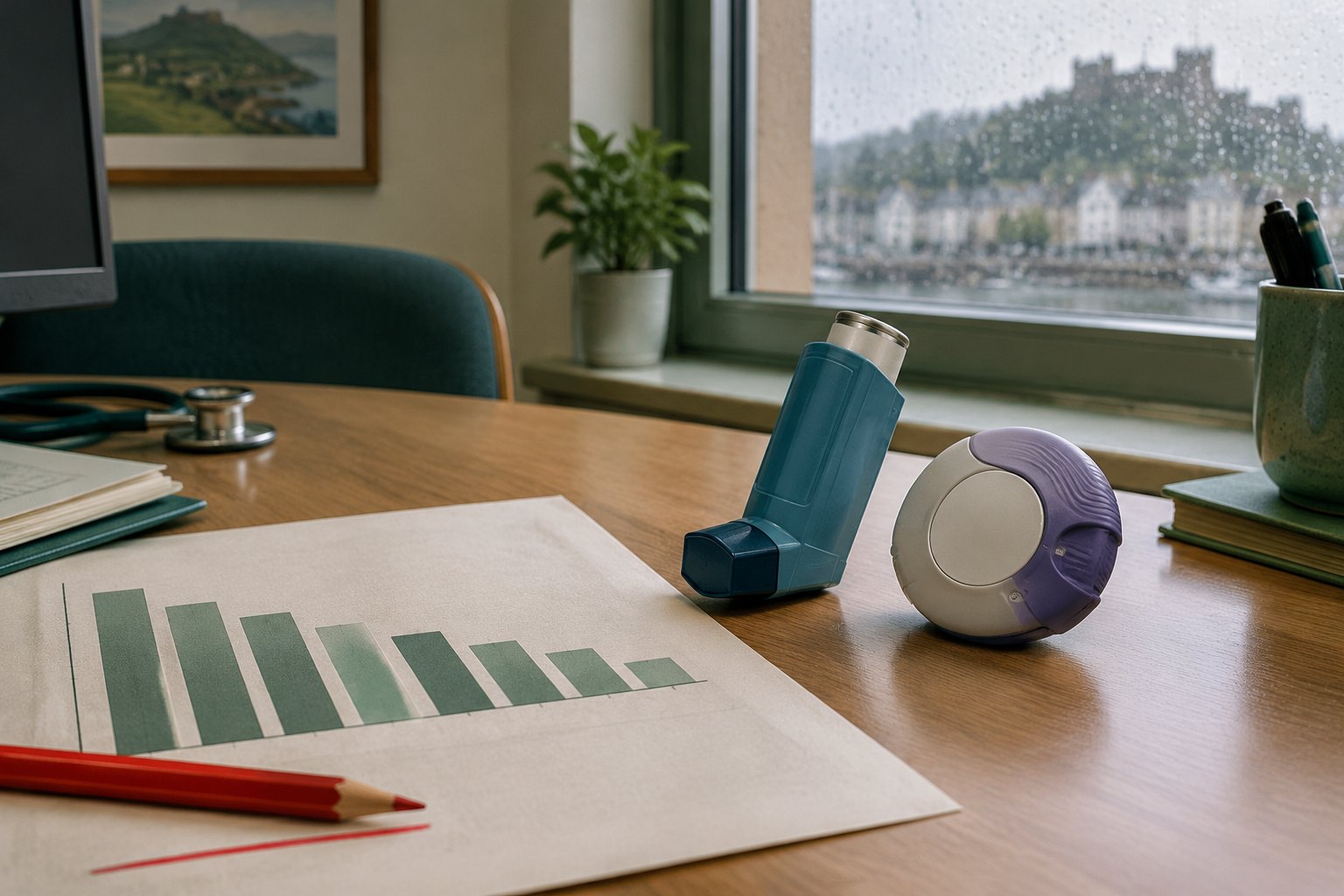
What the miss is allowed to mean
The task-and-finish group does not dress the miss up. The report says the aspirational 80 percent was not achieved by 2025, and that progress over a short period was still considerable. Monthly carbon-footprint reports from AWTTC are how the service watches the number now. Other UK nations are looking at the Welsh dashboard, which is a compliment and a warning: a method that publishes the miss will be copied, including by people who only wanted the 45 percent.
Set this next to the other inhaler story on this site, the GSK filing for a lower-carbon Ventolin. That one is a like-for-like propellant swap: same technique, same canister shape, climate impact of the gas cut by about 92 percent if regulators agree, launches from 2027 if they do. It does not help a 2025 share target. It does change what a share target will mean in 2028, because a pressurised reliever will no longer automatically be a high-carbon inhaler. Until that canister exists in a Welsh pharmacy, the honest instruction is the one the report already implies. Keep cutting rescue overuse. Move the patients who can use a dry powder. Do not count a patient who cannot as a failure of the 80 percent.
A department reading the August pack for a governance meeting can take three lines and stop. Emissions from inhalers are down by nearly half since 2019. The share target written for 2025 was missed, on purpose or not, because share and suitability are not the same sentence. And the next large cut, if it comes, will come from a propellant change patients are not asked to learn, not from another round of switching people who were never going to manage a dry-powder device.